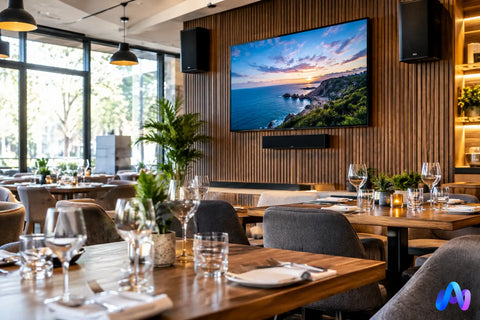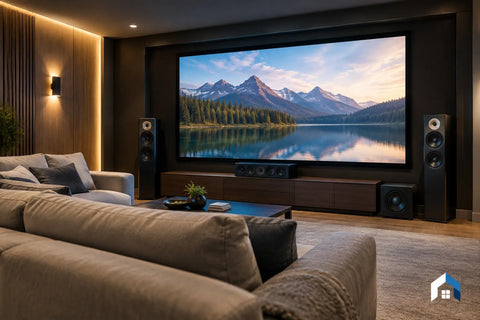
A great movie room is not defined by the size of the screen alone. Professional home theater installation brings the picture, speakers, lighting, network, controls, and wiring together so the room works as well on a busy weeknight as it does for a major game or family movie marathon. The goal is simple: powerful performance without visible clutter or complicated remotes.
For homeowners, the difference comes down to planning. A display mounted too high, speakers placed for convenience instead of listening position, or equipment installed without ventilation can make an expensive system feel disappointing. A properly designed theater accounts for the room before hardware is selected.
What Professional Home Theater Installation Solves
A home theater is a system, not a collection of products. The screen, projector or TV, audio system, source devices, network, control platform, furniture layout, and room acoustics all affect one another. Treating each piece as a separate purchase often leads to compromises that are difficult and costly to correct later.
Professional installation starts by identifying how the space will be used. Some clients want a dedicated theater with blackout shades, tiered seating, a projector, and immersive surround sound. Others need a refined media room that performs beautifully while still functioning as a living room. Neither approach is automatically better. The right one depends on the room, viewing habits, budget, and expectations.
It also solves the issues homeowners notice after the installer leaves: exposed cables, delayed audio, unreliable streaming, weak WiFi near the television, remotes that confuse guests, and components that overheat inside closed cabinetry. The cleanest finished rooms have infrastructure behind them - properly routed low-voltage cabling, labeled connections, ventilation, surge protection, and reliable network coverage.
Start With the Room, Not the Equipment
The room determines what will perform well. Before selecting a screen size or speaker package, measure the usable wall area, ceiling height, seating distance, window placement, and equipment location. These details influence nearly every design decision.
A large television can be the best choice in a bright family room, where daytime viewing matters and window light is difficult to control. A projector and fixed screen can create a more cinematic presentation in a dedicated space with controlled lighting. Projectors require more planning around throw distance, screen material, mounting location, and ambient light, but they can deliver an image size that a television may not match within the same budget.
Sound deserves the same attention. Hard flooring, glass, open floor plans, and high ceilings can create echoes and reduce dialogue clarity. Acoustic treatments, rugs, upholstered furniture, curtains, and thoughtful speaker placement can improve the experience without making a room look like a recording studio. In many homes, clear dialogue is more valuable than simply making everything louder.
Speaker Placement Is Not an Afterthought
Surround sound works when speakers create a convincing sound field around the primary seats. Front speakers should be positioned around the display at an appropriate listening height, while surround and height channels need deliberate placement to produce movement and immersion. A soundbar may suit a compact room or a simpler upgrade, but it cannot duplicate the separation and scale of a properly installed multi-speaker system.
Subwoofers also require planning. Their placement affects how evenly bass is distributed throughout the room. One subwoofer may be sufficient for a smaller room, while larger or irregular spaces can benefit from two. The best result is not always the most bass. It is bass that feels controlled, balanced, and integrated with the rest of the system.
Build the Wiring and Network for the Long Term
Wireless technology is useful, but a theater should not depend on WiFi for every critical connection. Hardwired network connections for streaming devices, gaming systems, receivers, control processors, and access points improve reliability and reduce congestion on the wireless network.
Prewiring is especially valuable during construction or renovation. Running conduit and rated low-voltage cable before walls are closed creates flexibility for future upgrades, whether that means adding speakers, changing a projector, installing a larger display, or integrating new control equipment. It also avoids the patchwork appearance of surface-mounted cables and extension cords.
Equipment location matters as much as cable location. A receiver, amplifier, media player, network switch, and power management equipment may fit cleanly in a dedicated rack, closet, or ventilated cabinet. Centralizing these components reduces visible clutter near the display and makes service easier. It also keeps the system organized when new devices are added later.
For homes with smart lighting, motorized shades, security, or whole-home audio, the theater can become part of a larger integrated environment. One control interface can dim lights, lower shades, start the selected source, and set the room to the right volume. That level of convenience only feels polished when the underlying network and wiring are designed to support it.
Control Should Be Simple for Everyone
The best theater technology fades into the background. A homeowner should not need to remember which input activates the receiver, which remote changes the volume, or why the projector has not turned on. A well-programmed control system reduces multiple remotes to an intuitive wall keypad, handheld remote, touchscreen, or mobile interface.
Simple does not mean limited. The system can still provide access to streaming platforms, cable or satellite service, gaming consoles, music, and multiple zones of audio. The difference is that common actions are designed around the way people actually use the room. “Watch TV,” “Movie Night,” or “Listen to Music” are clearer starting points than a stack of component remotes.
Control design should also consider the people using the room. A dedicated theater may benefit from a handheld remote with one-touch scenes. A family room may be better served by a discreet keypad and a familiar mobile app. If guests, children, or property managers will use the system, the interface should be even more straightforward.
Choose Performance Where It Matters Most
Budget decisions are unavoidable, and a strong installation does not require selecting the most expensive option in every category. It requires spending intentionally. In many projects, infrastructure, speaker placement, display calibration, and reliable control have a greater day-to-day impact than adding features that will rarely be used.
For example, upgrading to a larger display may make sense if viewers sit farther away, while investing in better acoustic control may be the smarter move in an echo-prone room. A premium projector is not the right answer if the room remains bright throughout the day. Likewise, elaborate automation may not be necessary for a single-purpose theater, but dependable networking and clean wiring should not be treated as optional.
A consultation should clarify the trade-offs before equipment is ordered. It should cover the room’s limitations, preferred content, desired level of control, future expansion plans, and practical budget range. This is how a system is designed around the client rather than around a preset package.
A Clean Installation Protects the Experience
The visible finish is part of the work. Displays should be mounted at a comfortable viewing height. Speakers should align with the room’s design where possible. Cables should be concealed, labeled, and tested. Equipment racks should remain accessible for maintenance, with enough airflow to prevent heat-related failures.
After physical installation, configuration and calibration complete the process. Video settings should be adjusted for the display and lighting conditions. Audio should be tuned for the seating area. Network connections, streaming services, control scenes, and user settings should be verified before the project is handed over. A theater is ready when the homeowner can sit down, press one button, and enjoy it.
Wall Street Networks designs and installs home theaters as part of a complete residential technology plan, from low-voltage wiring and dependable WiFi to audio, video, lighting, and smart home control. For homes in the NY tri-state area, San Diego, and the Bay Area, a professional consultation can turn an unused room or underperforming media space into an entertainment environment built to last.
The right next step is not choosing a screen online. It is walking the room with an experienced integrator, discussing how you want to use it, and building the system from the foundation up.