A packed dining room can still feel disorganized when the sound is harsh, televisions compete with conversation, or staff must hunt for remotes before every shift. The best restaurant audio video systems are not defined by the most screens or the loudest speakers. They are designed around how guests move through the space, how your team operates, and the kind of experience your concept promises.
For a neighborhood bar, that may mean clear game-day coverage and lively music. For an upscale dining room, it may mean carefully distributed background audio with no visible equipment. A fast-casual restaurant may prioritize menu boards, digital signage, and a network that stays reliable through rush periods. The right answer depends on the venue, but the infrastructure behind it should always be planned as one connected system.
Start With the Guest Experience, Not the Equipment
Restaurant AV should support the room rather than dominate it. Before selecting speakers, displays, or control hardware, define what each area needs to accomplish. The host stand, bar, dining room, patio, private event space, restrooms, and kitchen often require different audio levels and different content.
A sports bar may need multiple display zones so guests can watch different games without every screen showing the same channel. A restaurant with private parties may need independent control for a back room. A café with outdoor seating may need weather-rated speakers and display equipment that remains readable in changing light. Trying to run all of these areas from one consumer-grade setup usually creates a daily operational problem.
A professional system gives managers control without making them AV technicians. Staff should be able to select a source, adjust volume by zone, turn displays on or off, and follow simple opening or closing routines from a wall keypad, tablet, or centralized control interface.
Audio Is the Part Guests Feel First
People may not comment on a well-designed sound system, but they notice immediately when it is wrong. Sound that is too loud makes conversation tiring. Sound that is too quiet leaves a room feeling flat. Uneven coverage can make one table uncomfortable while another can barely hear the music.
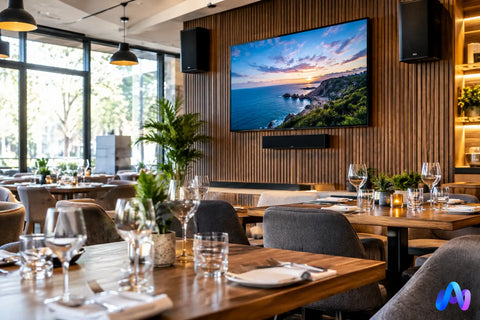
Speaker placement matters more than sheer speaker count. Distributed ceiling or pendant speakers can provide consistent background music across a dining room at a lower, more comfortable volume. Directional speakers may be useful near a bar or waiting area where more energy is appropriate. Outdoor zones need equipment rated for moisture, temperature changes, and exposure, along with placement that contains sound within the property as much as possible.
The source matters as well. Commercial music services are built for business use and can provide curated channels, scheduling, and appropriate licensing. Consumer streaming accounts are not a dependable substitute for a public venue. A restaurant system should also allow music to be separated from television audio, special-event microphones, or a live performance feed.
Design Audio Zones Around Real Service Areas
Audio zoning gives a restaurant the flexibility to match the energy of each space. The dining room can stay relaxed while the bar carries game sound. The patio can play background music independently. A private event room can use a microphone or presentation source without interrupting the rest of the restaurant.
More zones are not automatically better. Each zone adds equipment, programming, and operating complexity. The best design uses enough zones to solve real use cases while keeping day-to-day control simple.
Video Needs a Clear Purpose
Restaurant displays are often treated as a quick purchase, but the display itself is only one part of the system. Screen size, brightness, viewing angle, mounting height, cabling path, content sources, and remote management all affect whether video works well during service.
At the bar, guests need clear sightlines without screens blocking staff or crowding the room. In a fast-casual environment, commercial digital menu boards must remain readable from the ordering line and be easy to update. In private dining spaces, a display may support presentations, celebrations, or branded content. Each use calls for a different approach.
Commercial-grade displays are generally a smarter choice for restaurants that run screens for extended hours. They are designed for longer operating cycles, can offer better brightness and heat management, and may support centralized management. Consumer televisions can lower the initial cost, but they may not hold up to constant operation or provide the control features a busy venue needs.
Avoid the Remote-Control Problem
If several televisions rely on individual remotes, the system will eventually become difficult to manage. Remotes disappear, settings drift, inputs get changed, and a simple channel request turns into a staff distraction.
A centralized video distribution and control system can route selected content to specific displays, standardize startup settings, and reduce the number of devices employees need to touch. This is especially useful in venues with multiple televisions, large-format displays, or separate rooms. It also creates a cleaner installation, with equipment housed in a secure, serviceable location instead of scattered behind screens.
The Network Is Part of the AV System
Audio and video performance depends on the network and cabling underneath it. Digital signage players, streaming sources, control systems, point-of-sale devices, guest WiFi, security cameras, and office computers can all compete for bandwidth if the network was not designed for commercial use.
A restaurant should separate business-critical traffic from guest WiFi and entertainment devices. Managed switches, properly placed access points, and a business-grade gateway help maintain reliable coverage while providing visibility into what is connected. Wired connections should be used wherever practical for fixed displays, media players, and AV control equipment.
Low-voltage wiring also needs to be planned early. Clean cable routes, properly labeled terminations, and accessible equipment racks make future troubleshooting far easier. When AV, networking, surveillance, and access control are considered during construction or renovation, the result is cleaner, more reliable, and less expensive than opening finished walls later.
What the Best Restaurant Audio Video Systems Include
The best restaurant audio video systems are built as coordinated components, not a cart full of unrelated devices. Depending on the restaurant, a complete system may include distributed speakers, amplifiers, audio zoning, commercial displays, digital signage players, microphone support, video distribution, centralized control, structured cabling, and a managed network.
The key is selecting only what supports the operation. A small dining room may need two audio zones, a few displays, and straightforward control. A multi-room venue may need separate source routing, scheduled playlists, event-mode presets, display management, and stronger network segmentation. Budget should follow the business case, not a one-size-fits-all package.
It is also wise to plan for maintenance from the start. Equipment should be documented, labeled, ventilated, and installed where technicians can access it without disrupting service. A system that looks impressive on opening day but is difficult to service can become costly quickly.
Build for Daily Use and Future Changes
Restaurants evolve. Menus change, patios are added, private events become more common, and a once-quiet lunch spot may become a busy game-day destination. A scalable AV design leaves room for additional speakers, displays, inputs, and network capacity without requiring a complete rebuild.
Wall Street Networks approaches restaurant projects as connected environments, combining AV design with the networking, wiring, security, and control systems that keep the venue operating. That single-point approach helps owners avoid the common gap between an AV installer, an IT provider, and a general contractor.
Before making equipment decisions, walk the space at the times that matter most: during lunch, dinner, a crowded event, and after dark on the patio. Listen for noise, check sightlines, identify where staff needs control, and map the network behind every guest-facing experience. A thoughtful consultation at that stage can turn technology from one more thing to manage into a reliable part of the restaurant your guests remember for the right reasons.