A camera mounted above the front door or loading dock is not a complete security plan. Effective security camera systems are designed around what needs to be seen, when it needs to be seen, and who needs access to the footage. The difference matters when a delivery goes missing, an employee needs help after hours, or you need to verify exactly what happened on your property.
For homes, offices, retail spaces, restaurants, and warehouses, the goal is the same: clear visibility without creating another complicated system to manage. The right solution starts with coverage and infrastructure, not a box of cameras.
Start With the Risks, Not the Camera Count
It is tempting to begin with a simple question: How many cameras do I need? A better question is: What events do I need to capture and deter?
A homeowner may want to identify visitors at the entry, monitor package deliveries, view a driveway, and check activity around a backyard or pool area. A retail operator may need clear views of entrances, registers, aisles, stockrooms, and receiving doors. A warehouse may prioritize loading bays, perimeter access points, high-value inventory, and employee-only areas.
Each use case calls for different placement, viewing angles, and camera types. One wide-angle camera can provide useful awareness across a large area, but it may not provide enough detail to identify a face or read a license plate at a distance. Conversely, a tightly focused camera can capture excellent detail but leave adjacent areas unobserved. Good coverage is a deliberate balance between broad context and critical detail.
Before selecting equipment, walk the property and consider entry points, blind spots, lighting conditions, traffic patterns, and the path someone would take to reach valuable assets. This assessment often reveals that the most valuable camera is not the most visible one. It is the one positioned to capture a usable image at the decision point.
What Reliable Security Camera Systems Include
A professionally planned system is more than cameras and a mobile app. It combines surveillance hardware, structured cabling or reliable wireless connectivity, network capacity, recording storage, power, and user access controls.
Cameras matched to the environment
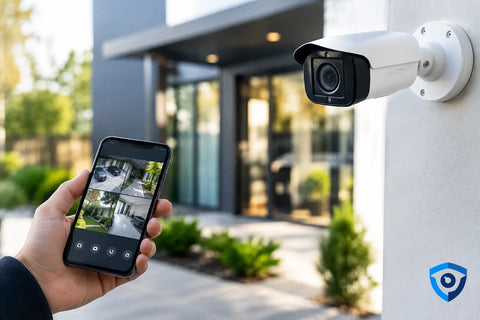
Outdoor cameras need to handle weather, heat, cold, glare, and low-light conditions. Indoor cameras may need a more discreet appearance or a wider field of view. Dome cameras can be a practical choice in public-facing spaces because they are compact and make their exact viewing direction less obvious. Bullet-style cameras are often useful for long exterior sightlines, driveways, and perimeter areas.
Image quality matters, but higher resolution is not automatically the right answer. Higher-resolution footage uses more network bandwidth and more storage. The best design pairs resolution with the distance and detail required for each scene. If identification is the goal at a front entrance, camera placement and lighting are every bit as important as megapixels.
Reliable recording and retention
Cloud recording offers convenient remote access and can reduce the need to manage equipment on-site, but recurring costs and internet dependency should be considered. Local recording can provide greater control, predictable long-term storage, and continued recording during an internet outage, depending on the system design. Many properties benefit from a hybrid approach that combines local storage with secure remote access or cloud backup for selected cameras.
Retention requirements also vary. A homeowner may be comfortable with a few weeks of footage. A business may need 30, 60, or 90 days based on operational policies, incident review needs, or insurance requirements. Storage should be sized for camera count, resolution, recording mode, and retention target rather than estimated after installation.
A network built to support surveillance
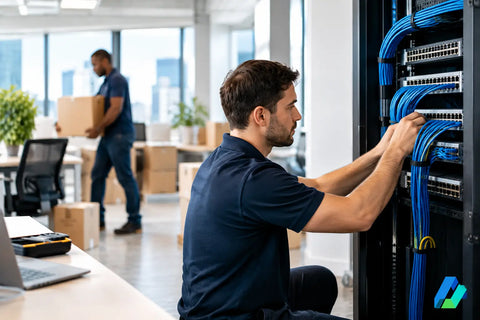
Security cameras are network devices. They need stable connectivity, adequate switching capacity, and properly managed power. Wired cameras powered through Ethernet are often the preferred option for permanent installations because one cable can provide both data and power. They avoid battery changes, reduce dependence on wireless signal strength, and offer a cleaner path to centralized recording.
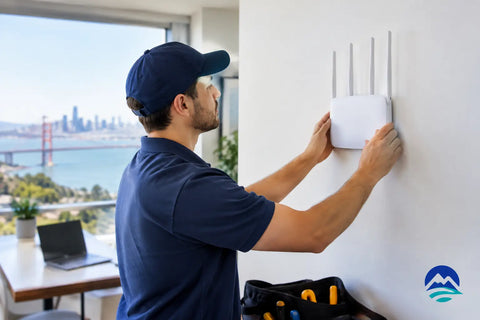
Wireless cameras can make sense where running cable is impractical, such as certain detached structures or temporary monitoring needs. The trade-off is that WiFi coverage, battery management, wireless congestion, and the physical construction of the building can affect performance. A strong WiFi signal in a living room does not guarantee reliable coverage at a gate, garage, or far end of a warehouse.
For larger homes and businesses, surveillance should be considered alongside the full network design. Cameras, access control, guest WiFi, point-of-sale devices, staff computers, and smart home technology all share infrastructure. Proper network segmentation helps keep surveillance devices organized and can improve reliability and security.
Placement Decisions That Affect Every Recording
Camera placement is where a system succeeds or fails. A camera should be high enough to discourage tampering, but not so high that it only captures the top of a person’s head. It should avoid looking directly into bright sunlight where possible and account for headlights, reflective glass, changing shadows, and nighttime illumination.
At entrances, the objective is usually identification. Position cameras to capture faces as people approach, rather than relying only on a wide overhead view. At driveways and parking areas, consider whether you need general activity monitoring, vehicle identification, or license plate capture. Those are different goals and may require separate camera positions.
Businesses should also think about operational usefulness. A camera near a receiving area can help resolve delivery disputes. Coverage at a register can support incident review. Views of a restaurant dining room may help management understand traffic flow, while cameras at emergency exits can document unauthorized access. Surveillance is most valuable when it supports daily operations as well as security.
Avoid installing cameras in spaces where people have a reasonable expectation of privacy. Employee and visitor communication should align with applicable laws and workplace policies. Audio recording is subject to additional restrictions in many locations, so it should never be treated as an automatic feature.
Remote Access Should Be Useful, Not Overexposed
Remote viewing is one of the strongest benefits of modern systems. A property manager can check a vacant unit, a business owner can review an after-hours alert, and a homeowner can confirm that a contractor arrived. But remote access should be configured carefully.
Use individual user accounts instead of sharing one password. Limit permissions so users can access only the cameras and features they need. Enable multi-factor authentication when available, remove former employees or vendors promptly, and keep network hardware and camera firmware current.
Notifications deserve the same level of planning. If every passing car, tree branch, or pet triggers an alert, users eventually ignore them. Motion zones, person or vehicle detection, schedules, and sensitivity settings can reduce noise and make alerts meaningful. The best notification is one that prompts action, not one that interrupts the day without a reason.
Professional Installation Creates Long-Term Value
A do-it-yourself camera can be appropriate for a simple, low-risk area. Professional installation becomes more valuable when the project involves multiple buildings, exterior runs, difficult cable routes, managed networking, long retention requirements, access control, or a need for clean finishes.
Experienced installers can identify sightline issues before hardware is mounted, protect outdoor cable runs, locate equipment where it can be serviced, and ensure the system has the network resources it needs. They can also coordinate surveillance with door access, intercoms, WiFi, and automation, reducing the number of separate apps and vendors a property owner must manage.
For clients in the NY tri-state area, San Diego, and the Bay Area, Wall Street Networks can design security around the realities of the site, from a connected residence to a busy commercial location. The goal is not to add technology for its own sake. It is to create a system that is clear, dependable, and easy to use when attention is needed most.
A well-designed camera system should fade into the background during ordinary days. When a question arises, it should provide the right view quickly, preserve the evidence clearly, and give you confidence that your property is covered.